The Great Olympic lie: untold story of Winter Games’ huge environmental impact
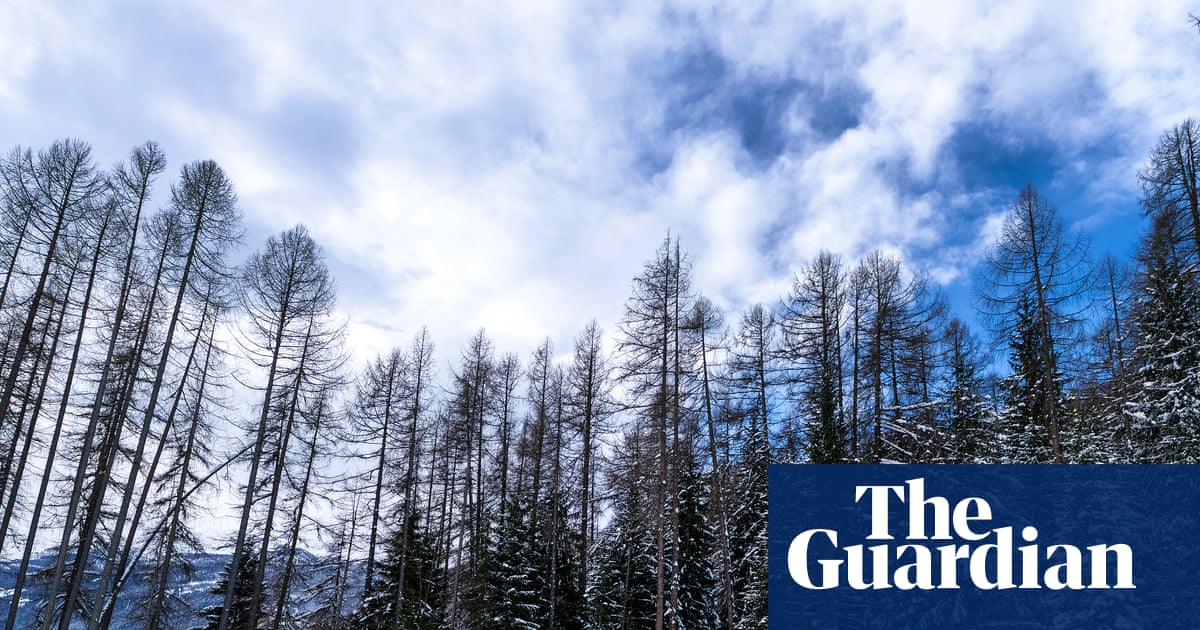
On the foothills of the mountains, by the banks of the river in Cortina, there was a forest. It was full of tall larch trees. Arborists said the oldest of them had been there for 150 years and dendrologists that it was unique because it was unusual to find a monocultural forest growing at such a low altitude in the southern Alps.The locals knew mostly it was the place where the old wooden bobsleigh run was, where you went on your walks in summer or autumn, or when you wanted to play tennis on the small courts built near the bottom. They called it the Bosco di Ronco and it isn’t there any more.Sustainability is the great lie of these Games. It was written all through the bid document and the International Olympic Committee has slapped it across all manner of promotional literature.“For the IOC, for sport in general, sustainability is a priority,” said the executive director of the Olympic Games, Christophe Dubi. If you want more details, the IOC can give you any amount of information about its low carbon transport plan and how it is only using recyclable cutlery and linen tablecloths. It will tell you over and again that 85% of the venues being used at this Olympics already existed or are temporary.What it won’t say is the vast majority of those existing venues needed to be demolished and rebuilt with much larger footprints; that, for example, they decided to gouge a new snowpark out of a mountain in Livigno even though they already had one at Trepalle in the adjacent valley. Or that in Predazzo the ski jumps were rebuilt from scratch a few hundred metres across from the existing ones. Or to make room for their new bobsleigh track they had to cut down the Bosco di Ronco, so that, if you go there now, all you see is 2km of steel and concrete.It won’t say, either, that the climate crisis has caused the average February temperatures in Cortina to rise by 3.6C since the Olympics were last in Italy, 20 years ago, that the average February snow depth has fallen by 15cm in the past 50 years and that they had to build four high altitude reservoirs to provide the 2.3m cubic metres of artificial snow they need to fluff up the ski runs to the required depth of 1.5m. Or that most of the water being used to fill those reservoirs has to be pumped all the way up the mountains after being extracted from the local rivers, which are already in drought for large parts of the year.It probably won’t mention that out of the total spend on the 98 construction projects, 13% went on things essential to the staging of the Games and that the remaining 87% is on infrastructure works – roads, rails, car parks – most of which are not due to be built until the Olympics is over. Or that the Italian government waived the need for any Environmental Impact Assessment work to be done on 60% of these projects. Or that all this is happening in the middle of a Unesco world heritage site and one of the most fragile ecosystems on the planet.“The Milano Cortina 2026 Winter Olympic Games were presented as ‘the Olympics of sustainability’,” says World Wildlife Fund Italia, “but this is not the case.”It didn’t need to be like this. WWF Italia was one of a group of environmental organisations involved in discussions with the Italian Olympic Committee to work out what a more sustainable Games would look like. It felt compelled to walk away from them when it became clear the organisers were treating it as window dressing.“In reality,” the WWF said, “there has been no real discussion, prompting the associations themselves to abandon the roundtable a year before the start of the Olympic Games.”When they cut down the Bosco di Ronco, the Venetian cellist Mario Brunello came and played Camille Saint-Saëns’s The Swan among the fallen boughs. Luigi Casanova, a former forest ranger who is now a writer and activist, was there with him.“You have to remember that in all these situations, the Italian environmental movement proposed alternative solutions,” Casanova says. “Less environmentally impactful, less costly, safe and socially beneficial to communities. The environmental and landscape impact of the Olympics will be paid for by those who follow us.”Casanova, who has written two vital books on the environmental impact of the Olympics, describes the destruction of the forest as “the most striking example of the violence of these Olympics”, then says: “We have other Olympic sacrileges to list: the Socrepes cable car in Cortina, built on a moving landslide, the Olympic village in Cortina, 15 hectares [37 acres] of natural land destroyed for a village that will be dismantled, the village of Predazzo built at the confluence of two alluvial streams; the slopes of Bormio and Livigno, upgraded with the destruction of thousands of trees.”Not everyone agrees with him. Local business owners say they do not miss the forest and would rather have the business the bobsleigh track will bring in. The Winter Olympics have been held in Italy twice before, in 1956 and 2006, a bob track was built both times and both fell into disuse.Their opinions reveal some the tension here, between the need to provide infrastructure that will support the local economy even while the construction of that infrastructure undermines the viability of the community.Carmen de Jong, professor of hydrology at the University of Strasbourg, has been running a multi-year study on the environmental impact of the Winter Games, concentrating in particular on the crucial issue of the water supply. It is easy to forget from watching the pretty pictures on TV that these Games are not being held on real snow. It has been made from water taken from springs, torrents, valley rivers, dam reservoirs, drinking water networks, even groundwater that has to be pumped uphill and cooled before use.“Four new reservoirs ‘had to be constructed’ to supply vast amounts of snow for only a few days of competition for the Olympic ski runs, half-pipe, and snow park,” she says. “In a frantic attempt to catch up the delay in reservoir construction, the organisers started pumping as much water as their infrastructure allowed from the already drought-stricken alpine rivers.”According to De Jong’s analysis, they used temporary derogations to take three and five times the permitted water quantities from the Spöl river in Livigno and Boite river in Cortina, “and almost completely dried them up, resulting in fish death and acute pollution.“Water reservoirs for creating artificial snow over ski runs in alpine ski resorts or Olympic venues are a clear sign of water scarcity and a cry for help in times of climate change.”Spreading the Games across such a vast area has only multiplied the effect they are having on the environment already under immense stress. The Olympic imperative that every Games has to be newer, bigger and better than the one before makes the claim that this is a “sustainable Games” an insult to everyone playing and watching.


.jpg)
Most Popular