PSC rolls out sports vision program
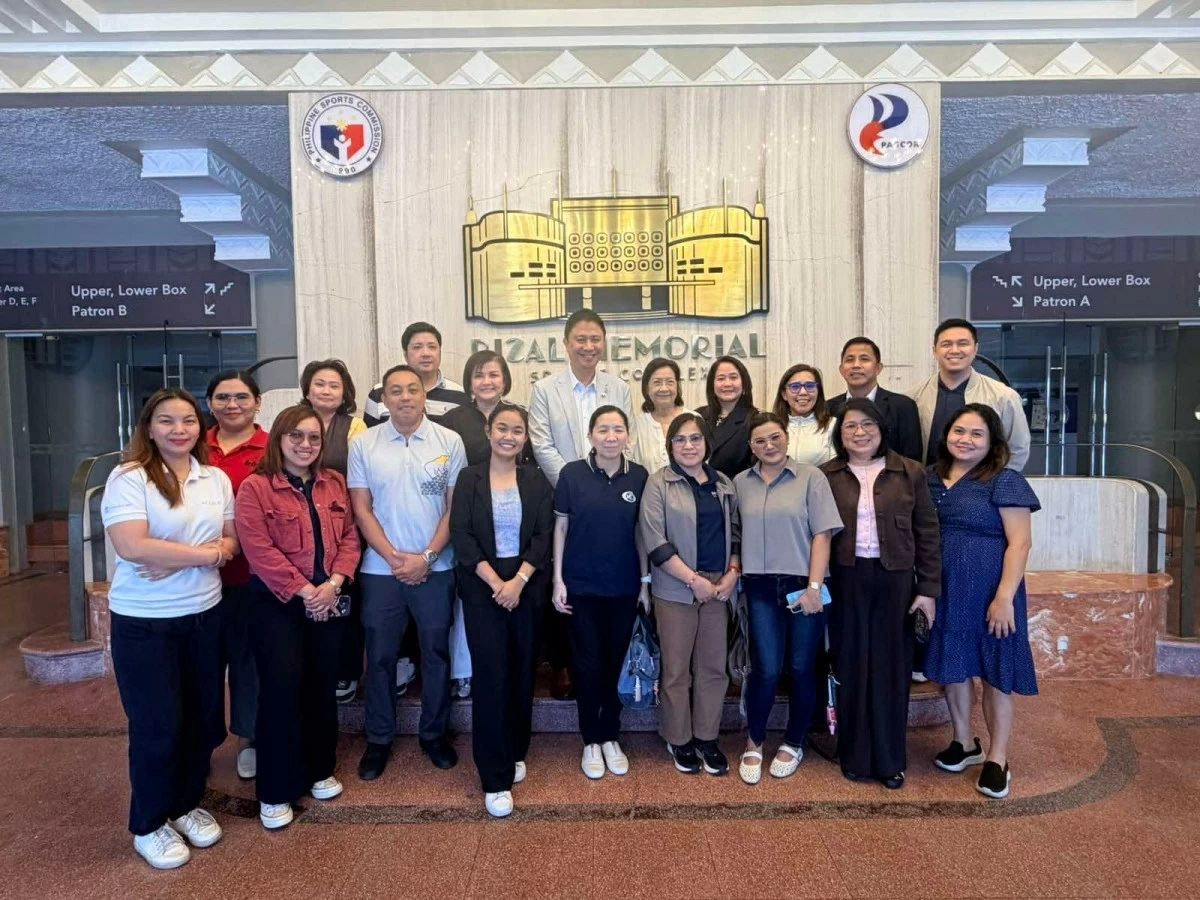
The Philippine Sports Commission (PSC) is set to break new ground in athlete development with a pioneering collaboration with Sports Vision on April 9 and 11 at the Rizal Memorial Coliseum, aiming to assure elite national athletes of perfect vision in their respective sports.“This is an eye-opener and a good realization that if we do this together, who knows we might start winning medals in sports that require perfect vision,” said PSC Chairman Patrick Gregorio, underscoring the importance of vision care in competitive performance.The initiative will be spearheaded by respected optometrists led by Dr. Teresita R. Yambot and Dean of the National University School of Optometry Dr. Maris S. Paredes, both influential leaders in Philippine optometry.The executive committee of the ``Sight on the Goal, Sports Performance Vision in Action’’ convened for a strategic planning session recently with Chairman Gregorio at the Rizal Memorial Sports Complex together with Yambot and Paredes, who head the FDM Vision Care, Research and Training Institute Team, along with valued industry partners.Dr. Yambot, past president of Vision Skills and Learning Solutions and the Integrated Philippine Association of Optometrists (IPAO), and Dr. Paredes, a past IPAO vice president specializing in pediatric optometry and low vision, have long advanced vision care standards in the country.Their leadership roles in the Board of Optometry and professional associations have helped elevate sports vision and performance vision practices nationwide.“This is something we have taken for granted, so I think this is the best time to do it for our athletes and for our national team as we prepare for the Asian Games in Nagoya, Japan this year,’’ said Gregorio.Organizers expect over 500 participants, including national elite athletes and student-athletes from the collegiate ranks, to benefit from the program in the event backed by the PSC in partnership with FDM Vision Care Research and Training Institute.The importance of vision in sports was recently underscored at the Philippine Women’s Open WTA125, where University of Santo Tomas standout Kaye Ann Emana competed wearing glasses against Russia’s Tatiana Prozorova in her WTA debut at the Rizal Memorial Tennis Center.Despite bowing out in the round of 32, Emana’s case highlighted how visual aids remain crucial for athletes striving to perform at the highest level, especially in fast-paced sports like tennis where reaction time and depth perception are vital.``I look forward to a successful collaboration and to identifying our athletes who need help with their vision. It’s the coordination of the eye and the brain,’’ said Gregorio, pointing out its importance in sports such as archery and shooting.Sports vision, a recognized field within optometry and sports science, goes beyond normal eyesight. The event, which will be holding a world-class specialty training in sports vision, will likewise be staged in partnership with NU-MOA School of Optometry, CEU School of Optometry.Featuring USA-based Sports Vision experts, Dr. Vittorio Mena and Dr. Elizabeth Nace, the program will illuminate the powerful connection between vision, brain and athletic success.Health care professionals, vision care specialists, educators, athletes, coaches and sports enthusiasts will be equipped with hands-on technique to assess and enhance an athlete’s visual performance and an in-depth knowledge on how vision training complements physical training to help them reach maximum potential.It involves training and assessment designed to enhance visual skills such as eye-hand coordination, depth perception, reaction time, and focus, essentially training the visual system alongside physical conditioning.Customized for each sport and athlete, sports vision is especially critical in disciplines requiring precision and speed, from archery and shooting to basketball, tennis, and martial arts.By integrating vision training into athlete preparation, the PSC hopes to unlock untapped potential and give Filipino athletes a sharper edge on the international stage.

.jpg)
Most Popular