
College tennis prizemoney rules may prevent American qualifier from accepting winnings
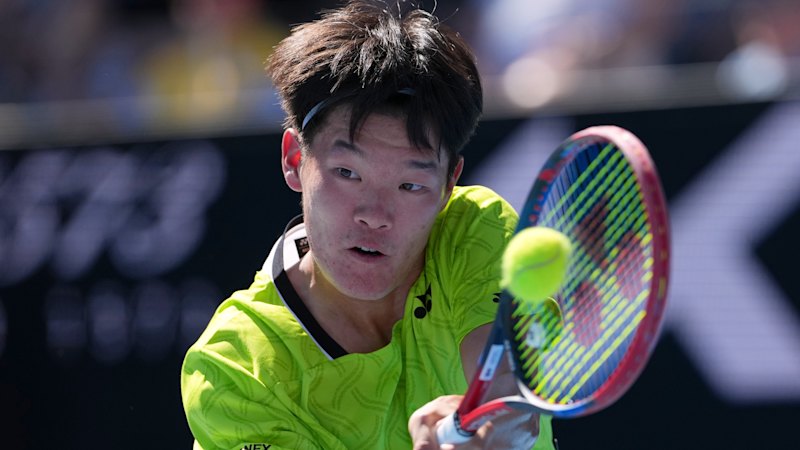
First-round winner Michael Zheng has already earned $225,000 at this Australian Open, a sum that will continue to increase should he go deeper in the tournament.But the American qualifier doesn’t know if he can accept a cent of it.Zheng attends and plays tennis for Columbia University in the US, and National Collegiate Athletic Association (NCAA) rules state that full-time student-athletes can only accept prizemoney that covers their actual and necessary expenses for participating in an event.The 21-year-old Ivy League student battled through qualifying then upset fellow American Sebastian Korda in five sets, which would usually guarantee him at least $225,000 ($US150,667), even if he loses his second-round match.“I’ll talk to our head coach, [and] try to figure out what’s the deal with the prizemoney, if I’m allowed to take it or not,” Zheng, who is ranked No.174 in the world, said after beating Korda.Australia’s Rinky Hijikata, who played college tennis for the University of North Carolina (UNC) from 2019-21, did not mince his words about Zheng’s unfortunate situation.“It’s not right if you’re a college athlete and get paid a million dollars to do a car commercial, but then you know Michael’s out here busting his arse [for potentially no financial reward],” Hijikata said.“He’s won three rounds of quallies, he’s beaten somebody top 30 in the world, and he can’t take his prizemoney for that. Yeah, I don’t know if I agree with that.”Hijikata’s car commercial example is in reference to the NCAA’s name, image and likeness policy that enables college athletes, predominantly in American football and basketball, to earn millions of dollars while retaining their eligibility.Four-time grand slam champion and former world No.1 Jim Courier also highlighted the hypocrisy of Zheng’s situation in the image and likeness era while commentating for Nine, the owner of this masthead.“The issue with someone who earns prizemoney as a college athlete and not being able to accept it makes no sense,” Courier said.“Logic will prevail at some point, but you’ve got a lot of issues in America, [and] that’s one of them. ”A number of college tennis players have forfeited their winnings in the past, but they are starting to push back.UNC’s Reese Brantmeier and Australia’s Maya Joint, a former University of Texas player, lead a class-action lawsuit challenging the NCAA’s ban on college tennis players accepting prizemoney.LoadingThe suit could impact thousands of past and present athletes. However, the parties are negotiating a settlement and could reach a resolution within weeks, according to a court document filed last month.Brantmeier and Joint want players to be able to compete in division-one college tennis but also accept all prizemoney they win in non-collegiate tournaments.Joint famously missed out on more than $200,000 prizemoney from reaching the second round at the US Open two years ago. At that stage, she intended on remaining an amateur and staying in Texas for college, but soon after chose to turn professional.There are 25 players in the Australian Open men’s and women’s singles draws with a college background – the most at the tournament since 1989 – but Zheng is the only one still enrolled.LoadingHe has won two NCAA singles championships, and intends to finish the final semester of his psychology degree.Zheng said he would turn his attention to the prizemoney issue after the Open.“I’ve heard rumours that I’m allowed to take it because it’s my senior spring, but I want to make sure to double-check, make sure there’s nothing wrong with eligibility if I take it. I don’t want to get in trouble or anything,” he said.


.jpg)
Most Popular


Dolphins announce Jeff Hafley as their new head coach
13 minutes ago