Reckon Demon doesn’t have the weapons to beat the best? Think again
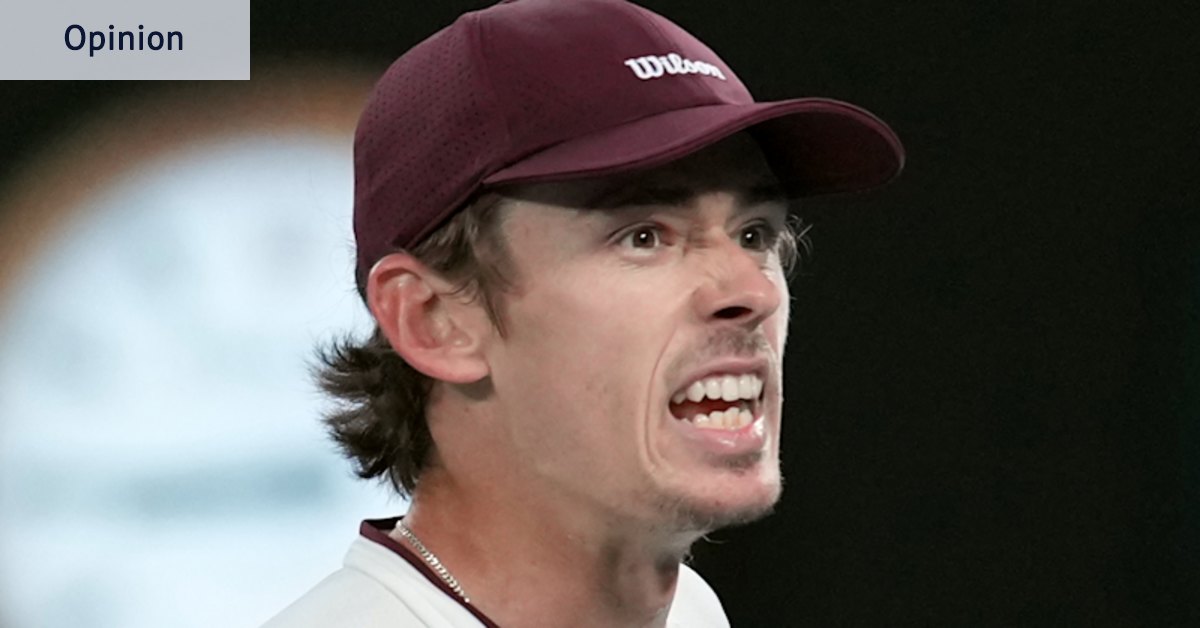
A glass ceiling has always hung above Alex de Minaur’s tennis career – but not of his doing.There is an obsession with listing everything that de Minaur is not, and what he supposedly never will be. The problem for those repeatedly doing so, even as he continues to smash through, is that the man known as “Demon” takes great joy in proving his many critics wrong.“I know that there are a lot of people who don’t think I can do it,” de Minaur said a few nights back.The world No.6 has never prescribed to the theory that it is counterproductive to be motivated by others. He accepts fuel from wherever he can get it, but is undoubtedly overflowing with self-motivation, too.LoadingThose critics admire then dismiss de Minaur in the same breath, and he hears and reads a lot of it.“Demon doesn’t have the weapons to beat the best,” is a common refrain. Another familiar one is: “I love Demon, but he’s just an Aussie battler”. There is also the lazy and equally condescending description that de Minaur is a “maximiser”. The connotation, of course, is that he is limited.That battler is a seven-time grand slam quarter-finalist as of Sunday night after demolishing in-form Kazakh Alexander Bublik under Rod Laver Arena’s floodlights.De Minaur systematically destroyed a rival who beat him twice last year, including from two sets down in the second round at Roland-Garros.That remains the only time from the 26-year-old’s past 10 major appearances that he has not reached at least the round of 16. He is exceptionally reliable, and only getting better.De Minaur is a noticeably different player this summer, but he is also radiating confidence, which happens when you spend the bulk of the past two years inside the top 10 and lead the tour for hardcourt wins last year.His much-maligned serve is the newest weapon – yes, weapon – in his artillery. If you don’t believe that, just ask Bublik and Frances Tiafoe, who had all sorts of trouble returning it.A key development is de Minaur winning more of the vital rallies that last from zero to four shots, too, and not relying on grinding opponents into the ground. He won that metric against both Tiafoe and Bublik, both of whom the de Minaur doubters believed should have had too much power for him.LoadingAs he put it after eliminating Hamad Medjedovic, another ball-crusher, in the second round (where he also won the 0-4-shot rallies): “I’m currently No.6 in the world, right? I’ve gotten there because I can play some ball, too.”De Minaur’s record against top-10 foes, particularly at the majors, understandably gives people pause.He lost 16 consecutive matches to that company before he defeated Taylor Fritz at the ATP Tour finals in Turin in November. That doubled as de Minaur’s maiden win in that exclusive event in his second year qualifying for it, and it was another injection of confidence.De Minaur’s victory over Bublik was just his second over a top-10 player at a grand slam, versus 10 losses, so there is more convincing to do.There is no better chance to do that than against world No.1 and six-times grand slam champion Carlos Alcaraz in the quarter-finals on Tuesday. The lid, let alone that glass ceiling, will be off if he wins that one.But the critics will assuredly be waiting to jump on him if it doesn’t happen.There is a middle ground here: de Minaur loses, but is competitive – more competitive than he was against Novak Djokovic and Jannik Sinner in two of his biggest matches at Melbourne Park across the years.Asked after his Bublik win what he would say to people to give them optimism this will be seventh time lucky in a major quarter-final, de Minaur rightly responded that it was not his job to do that, and he preferred to let his tennis do the talking.


.jpg)
Most Popular