Auqib Nabi, and the swing transformation that sparked a revolution

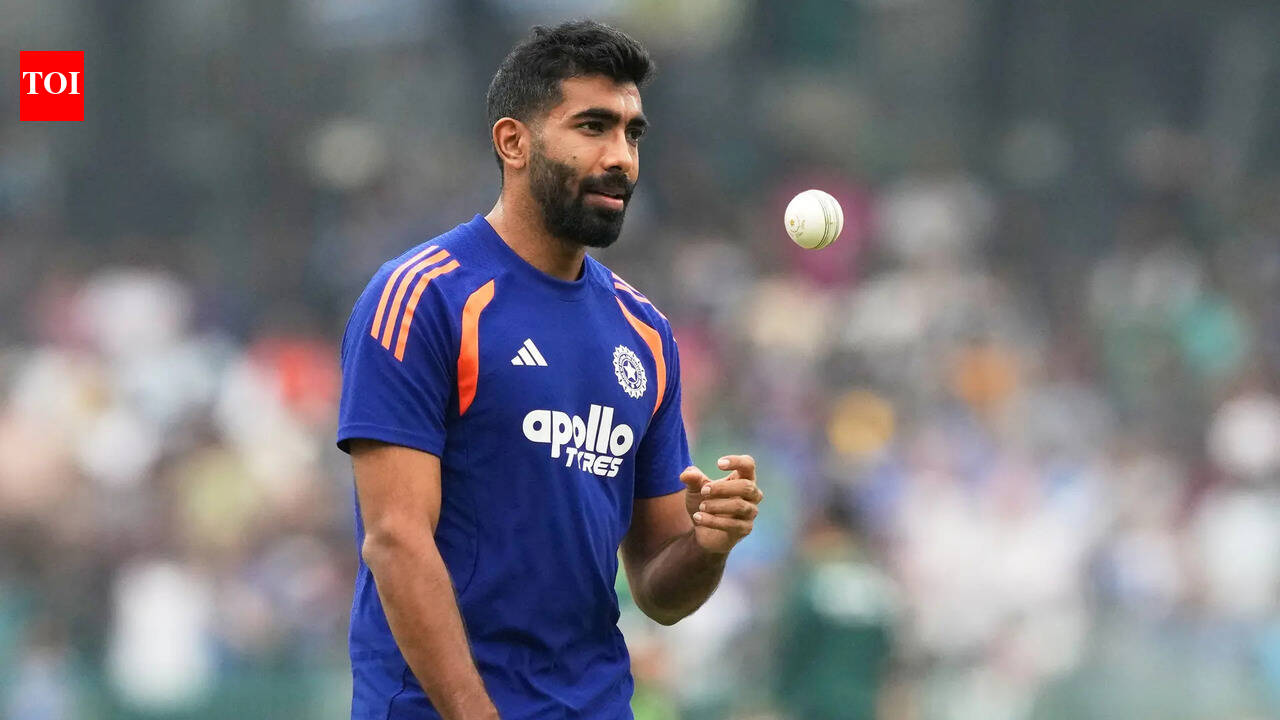
It isn't unusual for sporting tales to ride on hyperbole, to look larger than they are. But some stories are best served raw: real, devoid of fluff, true to heart and unpretentious.Jammu & Kashmir are playing in the Ranji Trophy final, a first for them in 67 years. And they do owe it to Auqib Nabi, and his record tally of 55 wickets (until semifinals). Nabi has become the poster boy of J&K cricket, the serene, bearded face headlining a team that has broken through decades of slumber, shaking up the Ranji Trophy.Yet his success isn't a fleeting trend. For the 29-year-old hailing from Sheeri, Baramulla, nothing has come easy. Growing up, he watched cricket ardently but could do little with the barebones facilities in his region. His family wasn't initially supportive. It took a long journey to reach where he is.Parvez Rasool, his first senior J&K captain, tells Cricbuzz that Nabi had to travel 60 kilometres to train in Srinagar. It was a similar story for Rasool himself, or for Rasikh Salam, the IPL quick. "We had two grounds in the 70s, we still have just two grounds," Rasool says. "Yes, the surfaces have improved, and practice pitches have come, but we haven't gone beyond that. The kids have done a lot of hard work."When the seamer first broke into the J&K Ranji team, he brought along the natural gifts of a good wrist position, a rhythmic action, and a natural outswinger. But there was no variety. So when P Krishna Kumar took over as J&K's bowling coach in 2023/24, he helped realign the pillars of Nabi's ability."I saw him bowling outswingers from the middle of the crease," Krishna tells Cricbuzz about his first meeting with Auqib at a Buchi Babu game. "I asked him if he can bowl an inswinger, or what else he bowls alongside an outswinger, maybe an offcutter?""Generally, if a kid comes to a fast-bowling coach and asks, 'Sir, kya karna ha?' (what needs to be done), the first thing he is told is to keep your wrist behind the ball."During his first year with Nabi at J&K, Krishna worked on developing his swing both ways. By the next season, the ball started to swing late. "In the process (of understanding different grips), he learnt the inswinger, and how to position it differently from an outswinger. I gave him the awareness of his own action."Krishna also worked on Nabi's alignment with the stumps, asking him to bowl from a lot closer. It added to the raw potential Nabi had already shown in his debut Ranji season when, in their run to the quarter-finals, Nabi had picked up 24 wickets at 18.50, taking a five-for in his first game.But it's these last two seasons that made Nabi headline material. Suddenly, J&K were a major talking point. Nabi secured a Duleep Trophy call-up and made waves there as well: his four wickets in four balls for North Zone against East Zone added a sensational page to a developing tale. Months later, he was snapped up by Delhi Capitals for a hefty paycheck of INR 8.4 crore, ticking off another box: a maiden IPL contract."It's important for a bowler to know how to describe themselves when asked," Krishna says. "What is my strength? What is my style? Only when are you aware of what's happening with your action and your wrist, can you master your skill. Earlier, Auqib did not know who he was.""Even if you ask Kapil Dev to bowl an outswinger now, he will, because that 'feeling' is there in him," says Krishna. "Nabi has mastered that now. That is why he is taking so many wickets."The year-long pursuit of excellence was a product of training sessions that went beyond the usual nets, working on specific skill sessions of the wrist position and his run-up. Accuracy was built through days of spot-bowling training, which Krishna likens to playing marbles."It is training the mind to repeat the action from the same release point, like playing kancha (marbles) in childhood. Only if you release the kancha from the right place, will it hit the other marbles."On Indian pitches, the ability of seamers to be effective is usually dictated by the nature of the pitch. When there's little assistance, and a bowler doesn't have express pace, it becomes difficult to stand out. But Nabi's success has been the product of unerring accuracy tied to variety.Watch any of his highlights, and you'll likely encounter two right-hander dismissals from the same release point: one hooping in, and the other cutting away, the batter clueless as to which one is coming. "He swings it late," Krishna adds. "It's very difficult to pick him. If you look at how he is getting left-handers out, there's a three-inch gap and he is still getting them bowled."Among others, Sachin Baby, the Kerala captain last season, would attest to that, having encountered a Nabi pearler in that quarter-final. A ball angled into middle-and-off, doing just enough to beat the outside edge and rattle the off-stump. A whole season later, another left-hander, Venkatesh Iyer got largely the same ball in a quarter-final, but it did just enough to take his outside edge and travel through to the keeper."In the last three years, he has really worked on bowling to left-handers in the nets and tried to get them out lbw or bowled, or caught behind, or (produce a) bouncer on one of the shoulders," Dishant Yagnik, J&K's fielding coach, tells Cricbuzz.Bringing all these skills together has allowed Nabi to have a complete season: he has excelled in different conditions, against different matchups, at different levels of the competition.This is what impresses Yagnik the most: "What makes Auqib different from others is his mode of dismissals. It doesn't matter if it's 3pm during the Indian summer, the start of winter, or the first phase of Ranji, whether there is help on the wicket or not, the mode of dismissal itself says the story of Auqib. I see it in Jasprit Bumrah too."Batters are missing the line; when they are leaving the ball, it is swinging in by 3.5 degrees. He never gets a soft dismissal, you won't see someone hitting a drive to cover or flicking to mid-wicket."That seven-for was followed by five more in the second innings, and the pattern was similar: denting the top-order, chipping away in the middle and sweeping the rest.His endurance has been a big factor: his ability needs to be well-supported by the physicality of bowling long spells in different phases. Krishna puts it down to Nabi's genetics, and the culture of eating in his region: "Most bowlers in J&K come from the Kashmir part and consume a lot of non-vegetarian food. The protein (ratio) is higher, which gives them an edge. They eat rich food and have higher endurance."Last game (semi-final), he bowled ten overs at a stretch: he has good bowling stamina. Some bowlers are very good at fitness tests, but their pace dips after 3-4 overs. With Nabi, because he has got such fluent run-up and smooth action, the load is very small on his body, which is why he can bowl longer spells."Krishna still sees room for Nabi to improve his fitness, but that's also a larger change in the making. Yagnik has taken it upon himself to build a fitness culture in a camp that is brimming with potential, but still learning to be more professional, and developing a holistic winning mentality."I try to get them tired (in fielding sessions) and then go to the nets and bowl," Yagnik says. "You will give more than your 100% when you are fit and fresh. But when you are tired and drained out, it's very difficult."At the start, Yagnik saw a clear gap in fitness standards and eating habits across the team. Yagnik, a two-time Ranji winner, feels that improving the overall levels has allowed them to challenge and beat the bigger teams. Nabi's individual brilliance has only rubbed off on the rest."I have seen a drastic change in the last two years. And to Auqib Nabi: actually, I always joke that we are indebted to you. Hum tumhare karzdaar hain. Because you have loaned everything to us. Whenever a wicket isn't falling, there is a long partnership, there's a Rajat Patidar or a big player from Mumbai: we tell Auqib: 'Brother, take this ball and get us a wicket'."And he always says, 'Yes sir, I will do it right away'. And he gets them out.For a player with such a respected status within the camp, Nabi still maintains a largely reserved persona. Slowly though, he has started interacting about his game a bit more."In our team meetings, we have a system that gives a voice to everyone," Yagnik says. "There's been a big change in Nabi. He's anyway had very few bad days: but whenever they came, he would just never speak. Now, he has started reaching out to the bowling coach (Krishna), who has had to, more than anything, understand Nabi's personality."At the start, he would barely say 15 words the whole day. There are a lot of loud characters in the dressing room, so he would get lost in the crowd easily. At least, he has started saying 30 words now! He has started speaking about his game, how to set up batters etc. He is still one of the calmest, zero-complaints guys."A good IPL season will brighten the spotlight on Nabi, but Krishna is certain that the bowler is already India-ready: "Why do we organise the Ranji Trophy and Duleep Trophy? These are steps to get into the Indian team. If a bowler is consistently performing and has taken 100 wickets in two years on Indian pitches, that is not easy."He was not given a chance in Rest of India due to rotation, which is okay. I feel if somebody is doing well, he should be given a chance now, rather than 'nahi, ek saal aur wait karte hain' (no, let's wait and watch for a year)."For Tests, everyone is connecting the pace factor: but look at the pitches he's bowling on. If you're getting Bengal out for 99, that is magical. I have not seen it in my 20 years of coaching. If not India, at least give him a chance in India A, against touring teams."For now, Nabi is still in Hubbali, looking to make a big impression one last time this season. He recently shared how Rasool's rise a decade ago fuelled a dream within. "When Rasool debuted for India, all of us realised a career in cricket was possible. He was one of us. I was also inspired. We had seen him in local grounds. I decided I could do it too," Nabi said."We didn't have any role models," Rasool says. "But after we started winning, and I got picked for India, the rest of the players thought: 'We can do it too'. That motivation is much needed."Title or no title, Nabi's success story is bound to spark a bigger revolution. And if that can cause a systemic change in the region, they will truly be karzdaar to him.


.jpg)
Most Popular

XI Changes & More
9 hours ago