Mauricio Pochettino’s odd jab at Tim Weah misread the player and the moment
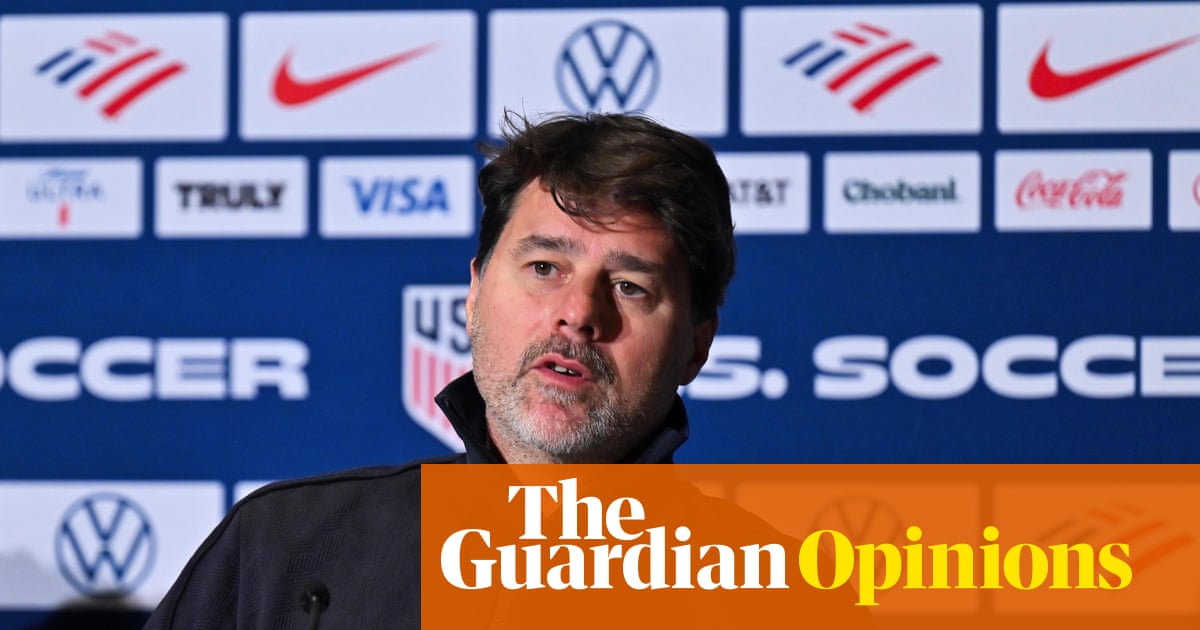
Last week, Mauricio Pochettino began a World Cup year with an unforced error.At the tail-end of a virtual press conference that covered a wide range of ongoing USMNT business, the 53-year-old Argentine – who has made himself commendably available to the American soccer press – was asked about recent comments by Tim Weah.The Olympique Marseille winger, already the holder of 47 US caps at age 25, had recently spoken to French regional newspaper Le Dauphiné Libéré about a range of topics and was lauded by the publication for his “lucidity, maturity and frankness” during the interview. Among the subjects: the 2026 World Cup, to be co-hosted by the US, Mexico and Canada this summer.“I am just a bit disappointed by the ticket prices,” Weah said. “Lots of real fans will miss matches.”“It is too expensive,” he added. “Football should still be enjoyed by everyone.”Pochettino plainly did not appreciate Weah wading into the affordability discourse that has become one of the dominant topics of this World Cup – along with, you know, all the rest of it.“I think players need to talk on the pitch, playing football, not outside,” Pochettino said. “It is not his duty to evaluate the price of the ticket … We are not politicians. We are sport people that only we can talk about our job.”The antediluvian stick-to-sports take rankled, in no small part because Weah wasn’t talking about politics. He was a soccer player commenting on an extremely soccer-related matter. The ability for people from any economic class to be able to come and watch Tim Weah play in a World Cup is inarguably something that relates to his job. Why shouldn’t he have an opinion on it?It also flew against recent precedent. The men’s national team has made it a point to become more outspoken in recent years – not nearly at the level of the Megan Rapinoe-era USWNT, but enough to notice. The players’ recent “Be The Change” campaign was aided and encouraged by the federation and Pochettino’s predecessor, Gregg Berhalter, who helped players find and sharpen their message.Pochettino then lent full-throated support to Fifa, a divisive governing body that has strayed far from its own statutory political neutrality in openly backing Donald Trump.“I think if Fifa does something or takes some decision, they know why, and it is their responsibility to explain why,” he said. “But it’s not up to us to provide our opinion. … And I think we have the organization that is over us, that is Fifa, that is doing an amazing job around the world uniting people. I think for sure the media need to ask [these questions] directly to Fifa, and for sure you are going to receive a very good answer. But no, it is not up to us to judge this type of thing. We need to be focused on the sports side, and trust in the organization that is in charge of soccer or football around the world, that they are going to do the right things.”On one hand: Pochettino was speaking from Fifa’s World Cup headquarters in Coral Gables, Florida; what else was he supposed to say? On the other hand: Oof.Save for the odd cranky moment, Pochettino has been affable and savvy since joining US Soccer after short-lived spells as manager of Paris Saint-Germain and Chelsea. But here, he sounded credulous and out of touch; ignorant of the many monetary obstacles placed before any non-rich fan wishing to support his team in person this summer. The cost of parking at the Los Angeles-area venue where the USMNT will play two of its three World Cup group stage matches will run as high as $300, per Fifa.It also contrasted sharply with Manchester City manager Pep Guardiola recently speaking out on the horrors in Gaza and showing support for the Palestinian people and their plight yet again.Rather than being called out for holding an opinion on something squarely within his realm of employment, Weah should be commended for handling the subject deftly; for acknowledging that there is indeed a whole world of people out there with experiences that differ significantly from his own. While not without his own awkward utterances, Weah does have a track record of responding thoughtfully when he has been dragged into actual politics – he was a member of the first family of Liberia until fairly recently, after all. Like that time he and several Juventus teammates found themselves in the Oval Office, the backdrop to an unprovoked broadside by Trump on transgender athletes.“It was weird,” Weah said after that experience last summer. “I was caught by surprise, honestly, when he started talking politics, with Iran and everything. I was kind of like, I just want to play football. … They just told us that we have to go, and I had no choice but to go. So I guess it was a cool experience, obviously being in the White House as a first time, it’s always wonderful. But I’m not one for the politics, so it wasn’t that exciting.”It is no small irony, then, that Weah and Pochettino appear to share the belief that players should remain apolitical. Which is to say that the manager not only misrepresented what Weah said, but also boosted the World Cup organizers who are blending soccer with politics.In doing so, he completely missed the mood of the moment.
.jpg)

.jpg)
Most Popular
Finishing second is a huge improvement: Klinger
16 hours ago