Why Rieko Ioane is struggling to match Barrett's X

If there is a sporting ‘renaissance man’ in the world of rugby, Jordie Barrett comes as close as anyone to fitting the bill. The reigning second five-eighth in New Zealand rugby plays off a one handicap and explored the lush golf courses around the Emerald Isle fully in his short sabbatical with Leinster. Iconic courses as diverse as Portmarnock, Royal County Down, Adare Manor and Druid’s Glen – ‘the Augusta of Europe’ – all felt the lash of the 29-year old’s three-wood.He even followed Kiwi PGA card-holder Ryan Fox around TPC Scottsdale religiously for a few days, but Jordie’s first love was cricket. As a teenager, he was a talented fast bowler for Central Districts; as recently as the start of 2026, he could be seen breaking the stumps and hoisting big sixes at the Hot Springs Spas T20 Black Clash spectacle in Tauranga’s Oval Bay.The ability to multi-task and step easily from one world into another is built into the Barrett mentality, and it explains his shift between every position in the backline over a kaleidoscopic senior career.“When I was young and impatient I wanted to play in one position, but I played 10, 12, 13, left wing, right wing and full-back,” he said. “It’s a gift for me, because I now understand as a 12 what your 13 needs out of you; what helps a winger; what a 15 needs from a 10 and the other way [around].”When the youngest of the Barrett clan moved to Leinster, the aim was to add another string to his cultural bow:“It is a great change of scene and it was important. I probably got myself out of a comfort zone with people and coaches and a country I am familiar with.“I [started to] test myself somewhere else, where you are uncomfortable. It’s been great, I’ve loved every minute of it.“It gets you out of bed every day. Nothing is certain and you don’t know what’s going to come at the end of the line, but the challenge is awesome.”There was no doubt that Barrett had both improved as a player and enhanced his standing in the game by the end of his six-month stint in Dublin, and he rapidly became pivotal to the province’s success. When he was omitted from the starting XV for the Champions Cup semi-final versus Northampton, Leinster lost. When he started in the URC Grand Final against the Bulls, they won. It was that simple, in black and white.Ioane hasn’t been bad by any means, but he hasn’t added any clear and obvious lift in quality to ‘the big show’ the east coast province are so used to delivering.When superstar Blues centre/wing Rieko Ioane reached out to Barrett for advice on a similar move to the same club, the Hurricanes man could recommend the experience whole-heartedly:“He sounded me out and just asked a few questions. He didn’t say a whole lot, so I didn’t get a good inkling of where his head or heart was – but look, I woke up on my day off and the news had dropped on my phone…“[I think] he’ll go great. It’s a great place to develop and he’ll see a lot of improvements up here as a player and get out of his comfort zone in Auckland and the Blues and [have] a chance to grow. I think it’s a great challenge for him.”To date, Barrett’s success story has spread less like wildfire, and more like a slow lick of flame on a damp morning for the Blues’ man. He has hasn’t been bad by any means, but he hasn’t added any clear and obvious lift in quality to ‘the big show’ the east coast province are so used to delivering.The stats say that Ioane has now played on 145 occasions in the centre, and 66 times on the wing. The feeling persists that his professional career is still falling between two stools, even after 88 caps for his country, and that it might have been better for him to stick rather than twist. Look at any highlight reel of Rieko’s best moments wearing the silver fern, and the majority of them occur when he has the No.11 on his back.The shared characteristic of most of those breakaway scores is the combination of sheer blazing speed with the abundant agility and elusiveness to make it count. The outcomes are almost Bielle-Biarrey-like in their certainty once space appears near the edge of the field.The question of where the 29-year-old is best placed remains a thorny issue for both Leinster director of rugby Leo Cullen and new All Blacks supremo Dave Rennie, because all of his starts in the capital city have been at centre, and the signs of reward on either side of the deal brokered in that position are few and far between.The weekend game between Leinster and URC leaders Glasgow brought those issues into focus. In recent times, Leinster has always tended to be superior at the possession game, and that bit better than Glasgow at the pointy end of the season. Events at Scotstoun on Saturday evening suggested that the balance of power may finally be changing.The double question of how Leinster can best cash in on his X-factor in the big end-of-season games to come, and how Ioane can milk the most of his experience at the club, remains unansweredLeinster entered the game tooled up, with eight current Ireland squad members, four of whom were 2025 British & Irish Lions, one current Springbok [RG Snyman] and another All Black [Ioane] in their matchday 23. In response, Glasgow fielded six Scotland squad members but no Lions.Only four were included on a typical Gregor Townsend bench at the 2026 Six Nations – namely Kyle Rowe, Adam Hastings, George Horne and Rory Sutherland. Saltire mainstays like Sione Tuipulotu, Huw Jones, Kyle Steyn, Rory Darge, Jack Dempsey, Scott Cummings, Gregor Brown and the Fagerson brothers? All missing. Yet Glasgow still won with something to spare: 38 points to 17, and six tries to three.The attacking minutes within a high ball-in-play time of 41’ were split evenly between the two sides, but Glasgow edged the battle of the line breaks [eight to four by Leinster] defenders beaten [20 to 14 by Leinster], post-contact metres gained [46% to 43% by Leinster] and possessions lasting over four phases [six to four by Leinster].The raw stats reveal that Ioane carried nine times for 61 metres and completed 12 of his 13 tackles on D. Not bad, but the double question of how Leinster can best cash in on his X-factor in the big end-of-season games to come, and how Ioane can milk the most of his experience at the club, remains unanswered.On defence, the Jacques Nienaber system often requires Ioane to defend as the ‘high man’ upfield as often as possible:On two successive plays from lineouts, Ioane runs straight past the ball at the top of the picture in order to cut off the option of a wide play to the open-side of the field. The Warriors’ solution is simple – they simply shift the ball back in the opposite direction for Rory Sutherland to break through where the line-speed is slower and the defensive front manned only by forwards.When rush defence works to its best effect, it tends to produce turnovers and tries at the other end of the pitch:It is the Blues man who is generating the defensive momentum on two of the three plays in this clip: first taking down big Staff McDowall and driving him back towards his own line, then playing the gap and making the intercept for Josh Kenny to finish at the other end of the field. The pattern of defence is clear in the overhead shot. The edge defenders drive up and in, and Ioane attacks the passing lane between attackers rather than man-marking. It is an outstanding double effort from the All Black.Glasgow scored both of these tries from deep in their own end against a Leinster D down to 13 men, and that period of ascendancy won them the game. In both situations the Dubliners’ defence is in pretty good shape despite the lack of numbers, but it becomes compromised in the 13 channel. In the first clip, both his mind and his feet become entangled with the uncertainty of whether to step in on McDowall or drift and trust the man inside him. In the second, he chooses to step in when it might have been better to slide out.The blazing foot-speed of prime 2017-2019 Ioane would have enabled him to recover once the play had moved beyond him and make a tackle in any case. On the intercept try, he would have kept ball and run in the score himself. But in 2026 he is caught between stools and the question of what he means to Leinster and what Leinster means to him remains open, and as yet unanswered.The same is also true on attack, where he looked heavy-handed, heavy-legged and struggling to get around the corner:Ioane first gravitated towards the No.13 spot in Super Rugby 2020 for the Blues. All Blacks head coach Steve Hansen had begun to prefer Swiss army knife Crusaders wingman George Bridge for the big games after a cataclysmic 47-26 loss to Australia in the 2019 Rugby Championship in Perth, and the pattern continued all the way through to the World Cup at the end of the year.The experiment has never been an unqualified success, but there have been just enough saving graces to allow it to continue. Ioane’s outstanding foot-speed was always useful in scramble defence and his lethality in an open field on attack remained, even if it was sighted far less often.
)


.jpg)
Most Popular
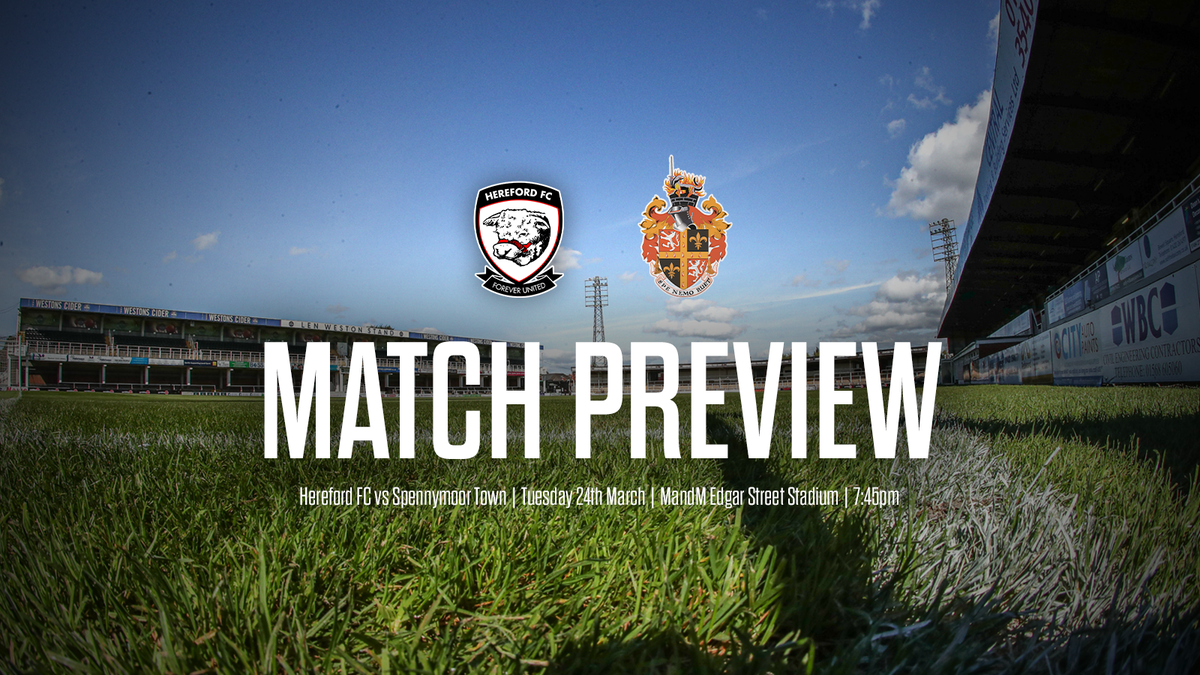
PREVIEW | Hereford FC vs Spennymoor Town
5 hours ago