Empowering girls through football: The Força Foundation story behind Olympian Esther Siamfuko
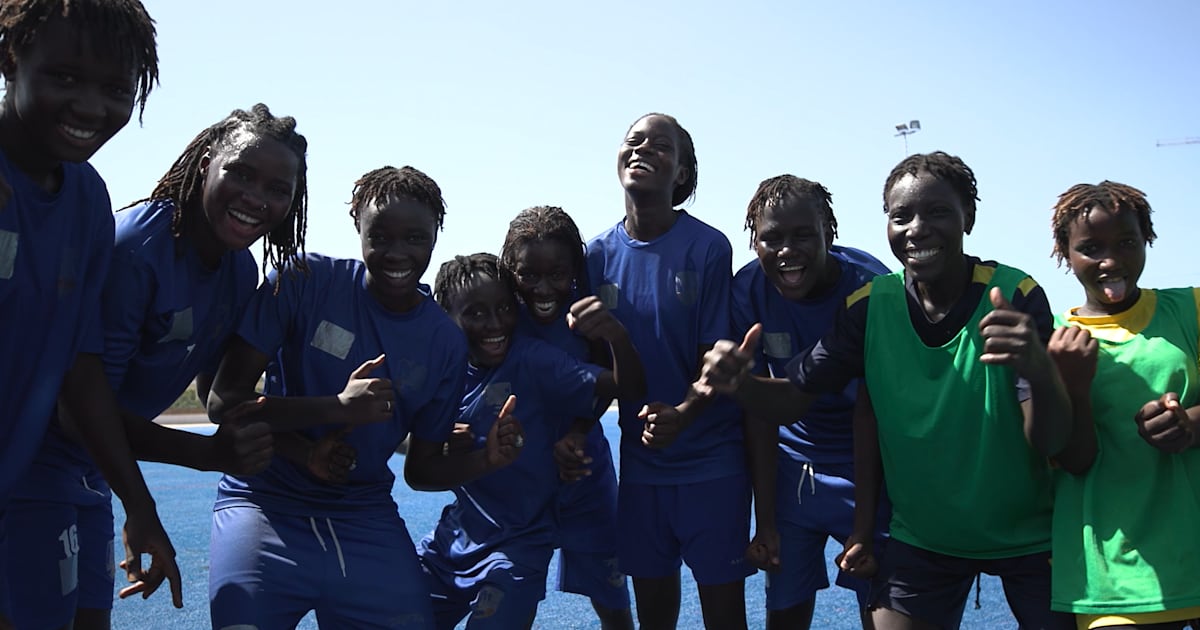
When Olympian Esther Siamfuko first joined a local girls’ football programme run by Força Foundation - no one could have predicted just how far the young girl would go.From that start at a community‑level sports programme empowering girls in Lusaka, Siamfuko has travelled a remarkable journey that has taken her all the way to the Olympics at Tokyo 2020 and Paris 2024.Siamfuko's story is much more than just a tale of personal success for the Força Foundation. It's a strong example of how giving girls access to opportunities and how consistent support can change their lives.“Esther’s journey shows exactly what is possible when girls are given space to play, to lead, and to imagine themselves at the top,” Kadia Sow Mbaye, the CEO of Força Foundation tells Olympics.com. “She embodies the strength, leadership, and motivation that our programme aims to build.”From Maputo to Lusaka, Dakar to Stockholm, Força Foundation is creating a generation of confident young women — ready to change the world.An idea that began as a single girls’ team in the suburbs of the Mozambique capital has now grown into an international programme empowering young women across Africa - and beyond.During the Dakar en Jeux 2025 held in the Senegalese capital, Olympics.com met the girls at the local chapter of Força Foundation which Mbaye founded, to empower them for life and give them support she wished she had.“As someone from West African origins, I knew the societal barriers that we are facing here,” she tells Olympics.com.“I knew these kinds of barriers from my experience in sport within my family and I wanted to offer them also the possibility to thrive, to empower the girls, to make them more powerful, and help them to become the leaders of tomorrow.”For the last seven years she has facilitated the strengthening of girls’ access in Senegal, one of the 30 countries across continents where the foundation is working to build inclusive leadership in and through football.Dakar 2026 : Africa's impact on the Olympics, key Olympians, and top Games moments from across the continentDakar 2026: Khadjou Sambe, Senegal’s first professional female surfer and the “mermaid” of Ngor breaking barriersKadia Sow Mbaye on why “girls deserve the same rights and chances in sports”Mbaye understands the pressures girls face very well - criticism, stigma, and the idea that sport “isn’t for them.”Growing up in a suburb of greater Paris with her grandparents, playing sport as a young girl of African descent was not a given.“From my personal experience, I played handball in Europe, but I grew up in a traditional family,” she remembered.“When I came home from practice with short hair and wearing shorts, I often heard comments like, ‘You look like a boy!’ I was mentally strong enough to handle this, but many girls are not. They face discriminatory comments about their bodies, their appearance…simply for participating in sport.”Decades later, she made it her mission to give girls the support she wished she had.“In Senegal, I was surprised to see that girls’ football was relatively visible. Many women run on the Corniche or practice sports daily. But still, far fewer girls play compared to boys. They have fewer opportunities, less access to space, and fewer female coaches or role models,” she noted of the hundreds of people who regularly exercise on the corniche of the capital of Senegal and beyond.Physical fitness is an important part of the Senegalese culture, but it was also evident that playing sports was limited, a gap that the Força Foundation helped bridge.“Sport is like culture — it is essential to society. Without sport or culture, you cannot have a stable, prosperous community. In every society, there are women and men, girls and boys, all born with equal worth. They deserve the same rights and the same chances,” said Mbaye.“Sport is a tool to develop ourselves: our personality, our bodies, and our health. It is essential for all girls and women - and for everyone. Sport is not about gender. It’s about health. It’s about life.”“With the Força Foundation, we want girls to see more women in sport, to have coaches who inspire them, and to become the next generation of leaders and role models. Our training content focuses heavily on how coaches can build leadership in girls.”Olympian Esther Siamfuko shines as a Força Foundation's success storyBased out of a football pitch in the capital Dakar, the local chapter of Força Foundation which loosely translates to ‘football gives strength’ has used its vision to change attitudes, social structures and social norms starting on the football pitches.Força, founded in Mozambique in 2012 by Cecilia Safaee and Sarita Simone, is working with UNESCO and other local partners ahead of the Youth Olympic Games Dakar 2026, to make sports in Senegal more inclusive.“Our dream — as an organisation — is for authorities, governments, and society to fully recognise that girls and women need sport. We need inclusive sport integrated in school curricula and in community leisure activities. We need sports everywhere,” she explained.“We decided not to build our own facilities. Instead, we partner with existing structures — ministries of education, football clubs, and sports federations — to change things from the inside using our methodology, training, and empowerment programmes.”For the Senegalese footballers, most of whom come from communities where girls’ participation in sport remains limited by social barriers, Zambian Siamfuko’s Olympic journey continues to inspire them.The defender’s rise and success serve as a strong example of what happens when a girl is given a sporting chance.

.jpg)
Most Popular
Leach Clinches Again, Card Beats NC State
10 hours ago