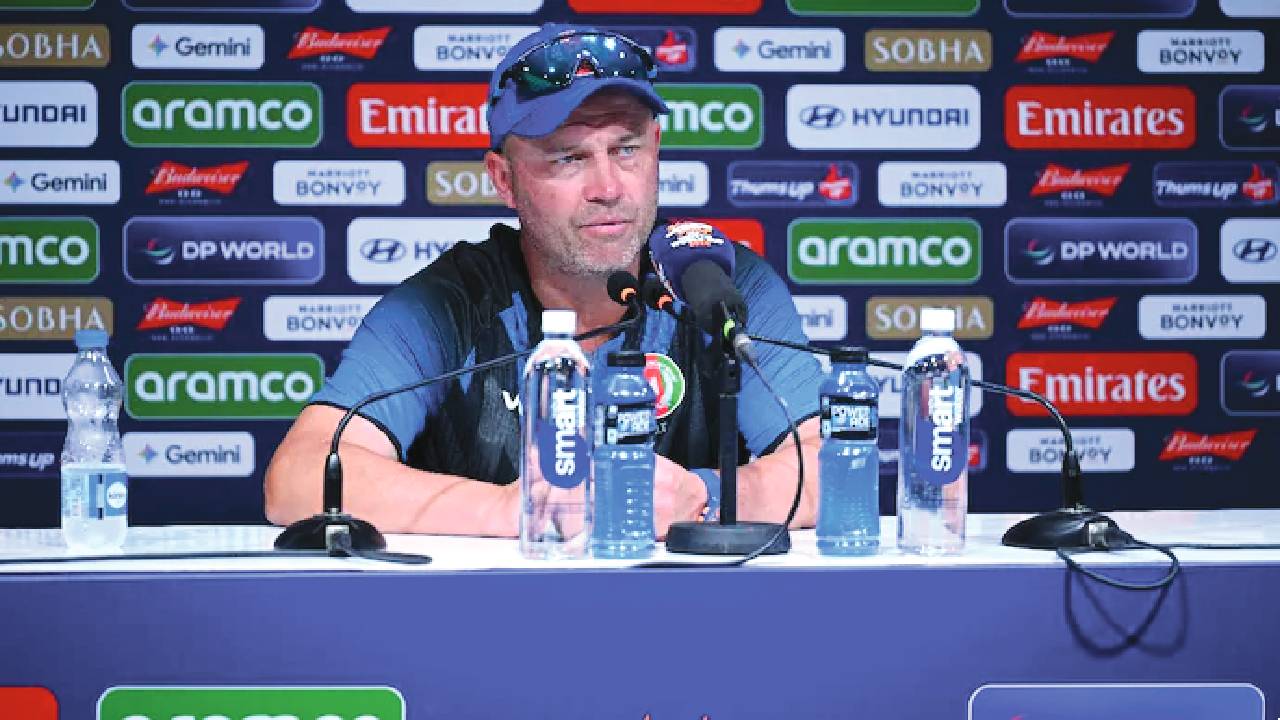
'Losing the dressing room'
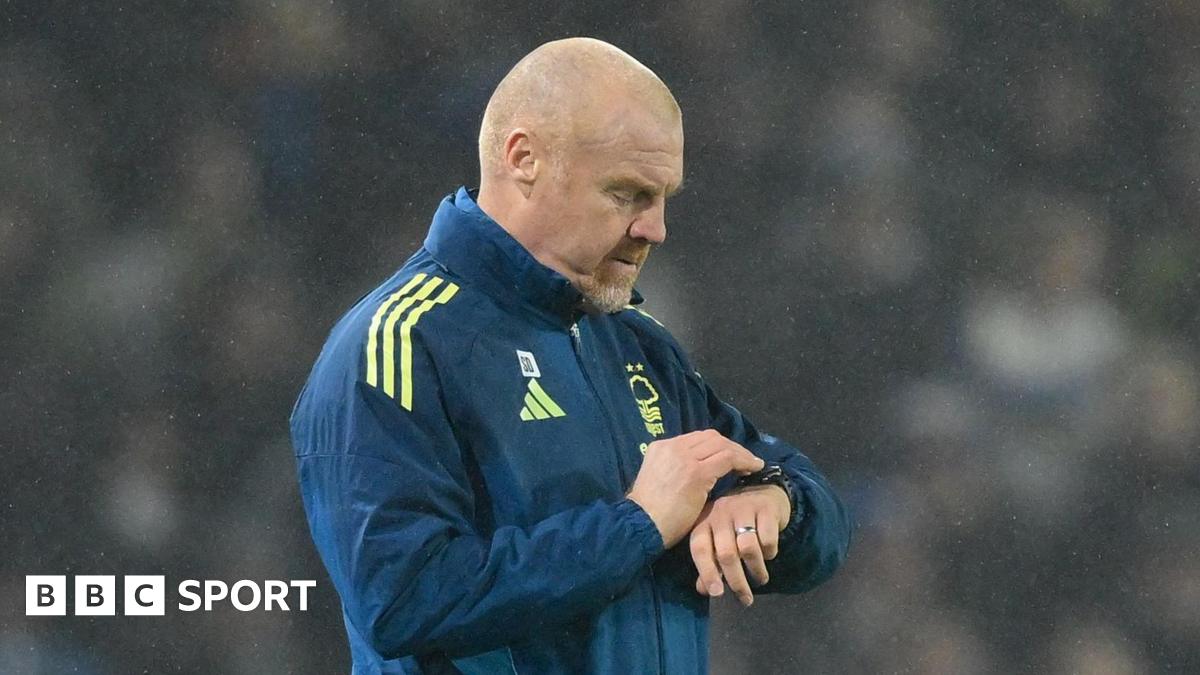
The phrase "losing the dressing room" now holds a regular place in modern football's lexicon, the game's ominous code for a manager sliding into trouble.Thomas Frank's sacking at Tottenham Hotspur and Sean Dyche's dismissal after only 114 days at Nottingham Forest were both accompanied by talk of internal discontent and revolt as players supposedly lost faith in their methods and approach.So what can lead to someone "losing the dressing room" - and can a manager ever find it again once it is lost?If leaks appear and rebellion rises in the ranks, there is usually only one outcome - the manager's departure.Ex-England midfielder Danny Murphy, who played for clubs including Fulham and Liverpool, told BBC Sport: "I take it as meaning when groups of players start questioning the manager's ability. It normally comes when you're losing."Questions arise around team selection, playing style, training sessions, days off. Everything. It all starts getting questioned, initially by little cliques of players, then it spreads."He added: "It could be players who are playing, but still don't completely agree with what the manager is trying to do. I think the feeling would be that players who are out of the team are more vocal with stuff like that, but it doesn't mean it's just them."It can become a constant noise in the dressing room."It is not as if I experienced players making a conscious plan to get the manager out. That's far-fetched, but for me 'losing the dressing room' means that you have more than a minority of players who feel you are on a bad path to failure."Former striker Chris Sutton, who won the Premier League with Blackburn, added: "It happens when players don't really listen to the manager any more. They just switch off - his messaging is lost."It could be tactics, clashes of personality. Many things. As an ex-player I know players can be fickle. The game is results-driven. Dressing rooms are fundamentally happy places when teams are winning. When they're not, the blame game can start."Murphy cites his experiences with former Fulham manager Lawrie Sanchez, who brought him to Craven Cottage from Tottenham in 2007."Lawrie is a good guy, I am very grateful he brought me to Fulham," Murphy said. "Nothing personal. It wasn't anything personal at the time, just a difference."He wanted to play long ball, very pragmatic football. We had a lot of good footballers, technicians, so even if you're in the team, there was still a feeling of 'What are we doing and why are we doing it?'"Lawrie was adamant this was the way we were going to get results but the more games we lost, the more it didn't work, the more it was questioned."You walk on the pitch a little bit sceptical, and that can transfer physically into your performance."In Dyche's case, a dressing room can be lost very quickly, after succeeding Ange Postecoglou to become Forest's third permanent manager this season.Dyche's reign went downhill after a good start, with BBC sources suggesting he struggled to bond with some players who questioned his methods and tactics, as he focused on the squad's physicality.Players' opinions were also canvassed after defeat at Leeds United and they did not give Dyche their full backing.So how quickly can a dressing room turn against a manager – and could it even happen before he steps through the door?Sutton said: "Players talk when a new manager comes in. Some players may have experienced that manager before, or there may have been fall-out. I think instant impact is important."Certain managers will go into a club and want to do things their own particular way. They may leave out a club legend who's already there, or a strong character, then that person won't be happy and might be influential in the dressing room."Murphy believes every manager gets a chance, but warned: "It can change within three or four games."It can happen after a few bad results and performances, when you feel like you're really struggling, getting beaten heavily, not competing in games."So maybe a month. One of the difficulties is when you have a dressing room where there is a little bit of pushback because some players are OK with the manager."This can become toxic as well because what you don't want is a group of players who feel differently, because then you don't have that cohesion and togetherness."But I would suggest when it starts going wrong it becomes a majority quite quickly."The simplest answer to improving matters is winning, with strategy producing results, even when the manager's methods are under scrutiny from players.Another, according to those with experience, is listening and adaptability.Murphy was part of the Liverpool squad that won a treble of Uefa Cup, FA Cup and League Cup under Gerard Houllier in 2001, adding another League Cup in 2003.He admitted Houllier's hardline approach met early resistance but results, and the manager's willingness to listen, turned things around."Initially the discipline was unbearable for a lot of the lads because he was so different," said Murphy."There was a lot of pushback away from him, away from his ears not to him, but results and performances improved so much that the proof was in the pudding."Houllier went on to manage Liverpol for six years, winning the FA Cup, two League Cups, the Uefa Cup and the Super Cup."And what about Thomas Frank at Spurs? At the end Cristian Romero, his club captain, killed him at Manchester United with a terrible red card,"Romero, by all accounts, is an influential, well-liked figure in the Tottenham dressing room, so Thomas Frank was in a position where he can't come out and throw him to the wolves by saying 'he's absolutely killed me there' - which he had. He has to back him to try to keep him on side."It seems club owners have the ear of players and vice versa. I can't honestly say that I was never at a club where I felt I was in a position worthy of going to the club owner, bypassing the manager. The game has changed."Sutton believes not, insisting: "I think pretty much once it's gone, it's gone."A manager can pull it back if, in the short term, he goes on an unbelievable run of results and you get players believing in what you're doing and what they're doing - or maybe with a massive cull, but once it's a gone, a manager has real problems."Murphy added: "A manager can get it back, but it's rare. It's the exception rather than the rule."
.jpg)

.jpg)
Most Popular